
Why Does Ice Float on Water? The Unusual Physics of Density
Water expands as it freezes because hydrogen bonds organize molecules into an open crystal structure that is less dense than liquid water.
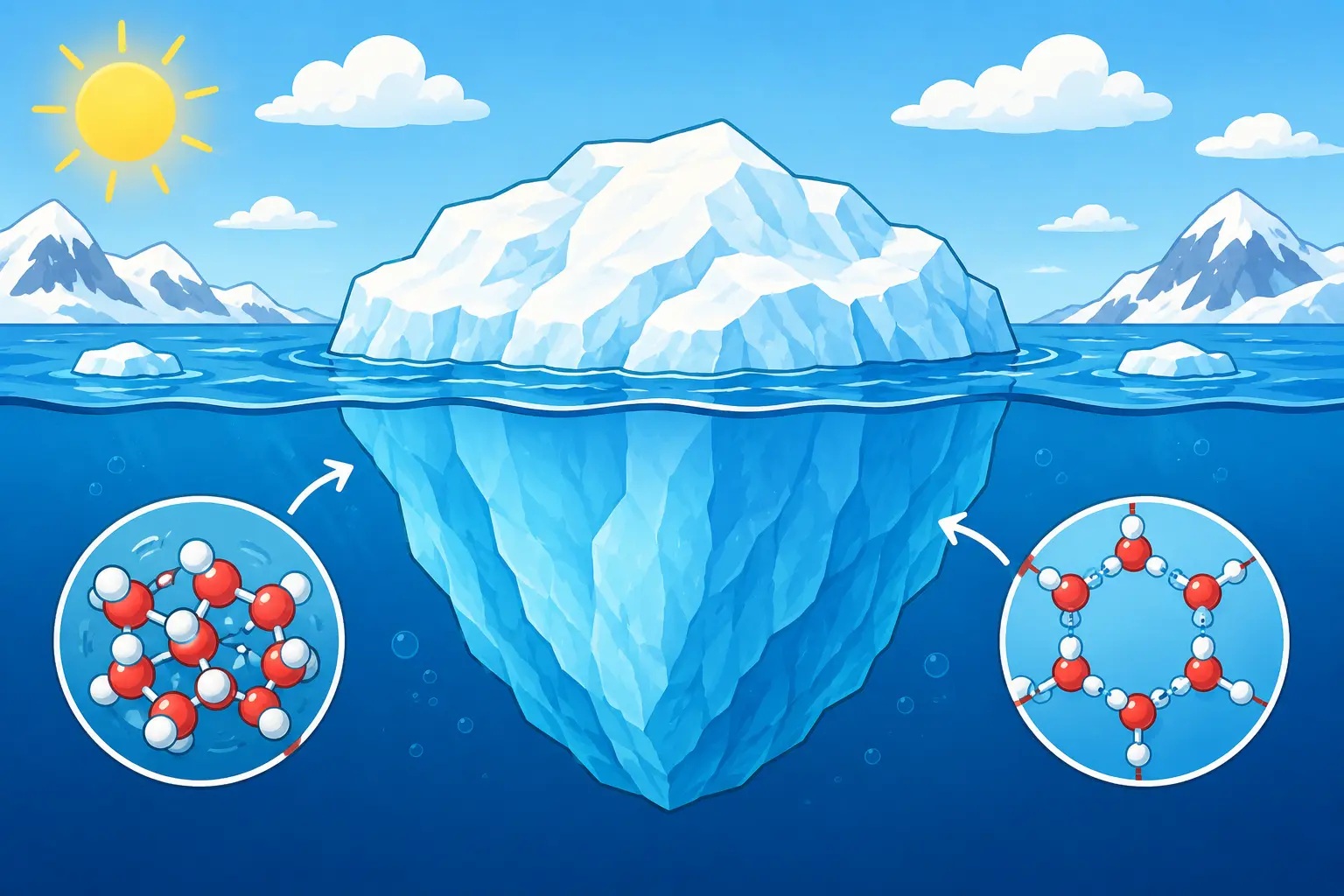
Why Does Ice Float on Water? The Unusual Physics of Density is easier to understand when the headline question is separated from the variables that actually shape the answer. Water expands as it freezes because hydrogen bonds organize molecules into an open crystal structure that is less dense than liquid water. This guide builds the explanation from first principles, then turns it into a practical framework you can use without relying on hype or an isolated statistic.
The central idea is that hydrogen bonds, density, and the frozen lattice describe different parts of the same system. Treating one number or feature as the entire answer usually hides the most important trade-off. Context matters: the relevant explanation or choice depends on what is being observed, what you are trying to achieve, and which constraints cannot be changed.
The essential idea
Water expands as it freezes because hydrogen bonds organize molecules into an open crystal structure that is less dense than liquid water. That statement gives us a reliable starting point, but it does not mean every real-world case will look identical. Models simplify reality so that relationships can be measured and tested. Practical decisions add constraints such as environment, budget, comfort, compatibility, available time, and individual variation.
Start by asking three questions. What outcome are you trying to explain or improve? Which variable has the greatest influence on that outcome? What evidence would show that a change made a meaningful difference? These questions prevent a vivid anecdote or an impressive specification from replacing the complete picture.
How the main factors work together
Hydrogen bonds
hydrogen bonds is the first useful lens because it defines a major part of the mechanism or decision. Instead of asking whether more is always better, ask what changes as this factor rises or falls, how it is measured, and where diminishing returns begin. That produces a more durable understanding than memorizing a recommended value.
Density
density adds the conditions surrounding the first factor. Two situations can share the same headline number and still produce different outcomes because their timing, environment, scale, or implementation differs. Comparisons are meaningful only when the conditions are reasonably similar.
The frozen lattice
Finally, the frozen lattice explains why the result must be judged as a complete experience or system. A benefit may be real but too small to notice, or it may create a cost elsewhere. The goal is not to maximize every variable; it is to find the combination that best serves the actual purpose.
A practical way to evaluate the topic
Imagine comparing two explanations, products, or routines. Option one advertises an outstanding result for hydrogen bonds but performs poorly when density becomes important. Option two is less dramatic on paper yet balances all three factors. If your goal depends on reliability across normal conditions, the balanced option can deliver the better result.
Use a simple three-column note: must have, useful, and optional. Put requirements that determine success in the first column. Put noticeable improvements in the second. Reserve the last column for attractive details that do not change the outcome for your situation. This keeps the central question visible and makes comparisons easier to revisit later.
Common misconceptions
One answer works for everyone
General principles are useful starting points, but circumstances change priorities. A recommendation should state the conditions under which it applies.
Related terms mean the same thing
hydrogen bonds and density may appear together without being interchangeable. Definitions, units, and measurement methods matter.
The largest number is automatically best
Higher values often bring diminishing returns. Once another constraint becomes the bottleneck, increasing the headline number may add cost without a visible benefit.
Quick checklist
- Define the result you want to understand or achieve.
- Identify the two or three variables with the strongest influence.
- Compare alternatives under similar conditions.
- Check compatibility, scale, measurement units, and practical limits.
- Prefer evidence and repeatable observations over isolated claims.
- Reassess after testing; a good decision can be adjusted when new information appears.
Frequently asked questions
What matters most when learning about this topic?
Understand the relationship between hydrogen bonds, density, and the frozen lattice. A single fact rarely explains the full result, while the relationship between variables usually does.
Is there one best answer for every situation?
No. The underlying principles remain useful, but the best interpretation or choice depends on goals, conditions, and constraints. Good guidance makes those assumptions explicit.
Should I always choose the highest specification or most extreme explanation?
Not necessarily. More can be valuable until another factor limits the benefit. Compare the complete system and prioritize differences you can actually observe or use.
References and further reading
The organizations below publish primary guidance, standards, or educational material relevant to this category. Use them to verify details and follow new developments.
Conclusion
The most useful way to approach why does ice float on water? the unusual physics of density is to connect the mechanism to the context. Water expands as it freezes because hydrogen bonds organize molecules into an open crystal structure that is less dense than liquid water. Once hydrogen bonds, density, and the frozen lattice are considered together, the topic becomes easier to explain, compare, and apply.
Keep the framework rather than a single recommendation: define the goal, identify the controlling variables, verify the evidence, and test the result under realistic conditions.